eDNA in the Catchment
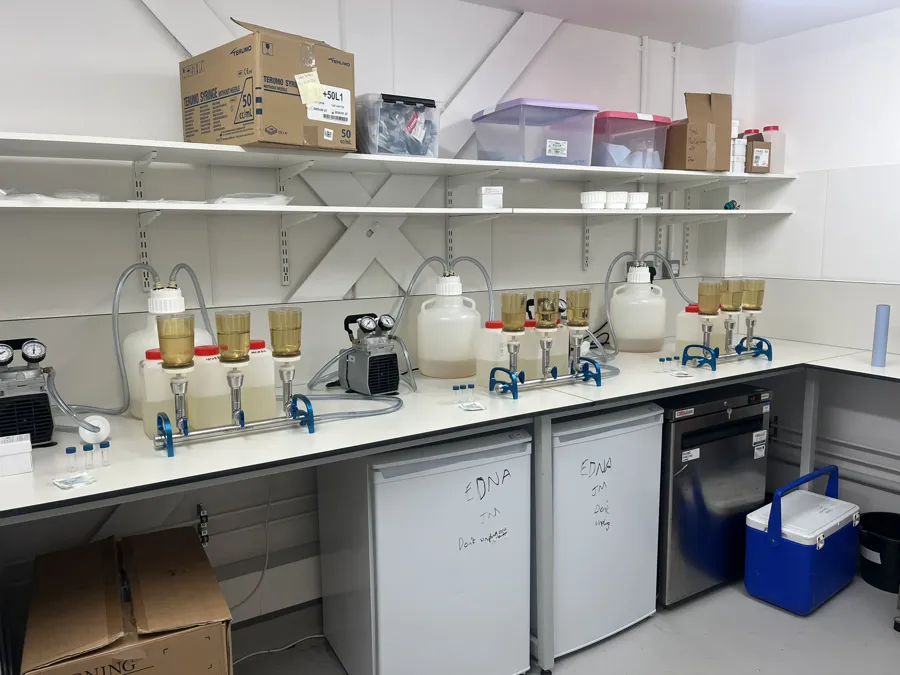
Collecting and processing eDNA samples from 42 sites across the catchment to track ecosystem health and local biodiversity.
What we are doing
Through our contractor, James Macarthur, we have collected eDNA samples from 43 sites across the catchment to help us assess the current biodiversity within the Cromarty Firth watershed. Organisms shed their genetic traces (hair, fecal matter, mucus) as they interact with their environment, including the rivers, allowing us to identify individual species without invasive techniques or methods. Because eDNA is so sensitive, it allows us to detect shy, elusive and rare species that we would likely otherwise miss if we attempted to survey them through other methods, such as transects, electrofishing or trapping. This also means that we cause no harm or stress to any of the species we find, as this avoids any physical interaction.
Why it matters
Before we can begin any meaningful work, we need to better understand what species live here, how they interact with their local environment, the quality of the habitats and if there's any non-native invasive species present that may undo any measures we implement. This way, we will be able to evidence our work to prove its benefits to the catchment and ensure that all of our projects are science-led, with community involvement. We will continue to monitor the catchment over the years and show positive ecological changes such as an increases in biodiversity, the presence of rare species or improved habitat connectivity (e.g. removing river barriers that have historically prevented fish passage).
Active
Baselining biodiversity
43
James Macarthur & UHI
3,000 km2
2026